
Finding the dress is exciting, but getting the fit right is what truly brings the bridal look together. One of the biggest mistakes brides make is waiting too long to schedule alterations. A wedding gown may look beautiful on the hanger, but most dresses still need adjustments to fit properly through the bodice, waist, hips, hem, straps, or bustle.
At Bri L Design & Alterations, we help brides in West Columbia and the surrounding area feel prepared, polished, and confident for the big day. If you are wondering when to start, here is a simple guide to the ideal wedding dress alterations timeline.
Why Bridal Alterations Should Never Be Left Until the Last Minute
Wedding dresses are different from everyday clothing and even most formalwear. They often include:
- delicate lace
- layered fabric
- structured bodices
- beadwork
- trains
- bustles
- custom design features
Each of these details can affect how long alterations take. Even simple changes may require more care than expected, especially when the dress has multiple layers or intricate finishing. That is why bridal alterations should be approached as part of the wedding planning process, not as a last-minute task.
Ideal Timeline: 2 to 3 Months Before the Wedding
A good general rule is to schedule your first bridal alteration appointment about two to three months before your wedding day.
This gives enough time for:
- the initial fitting
- one or two follow-up fittings
- hem adjustments
- bustle work
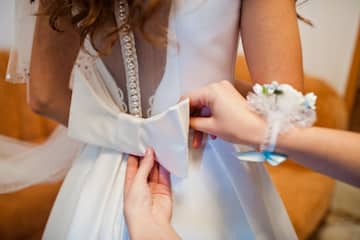
- shaping through the bodice or waist
- final refinements closer to the wedding
For many brides, this timing creates the best balance. It is close enough to the wedding for fit to be more accurate, but early enough to avoid stress if extra changes are needed.
Book Earlier for Detailed or Structured Gowns
Some dresses need more time than others.
You may want to book even earlier if your gown has:
- heavy lace
- detailed beadwork
- corset structure
- fitted long sleeves
- multiple layers
- a dramatic train
- custom changes or restyling needs
If the gown is more intricate, the alteration process may take additional time and care. Booking early gives you more flexibility and helps avoid the pressure of trying to rush important changes.
First Fitting: What Usually Happens
At the first fitting, the goal is to evaluate how the gown fits your body and identify what needs to be changed.
This may include:
- checking the hem length
- evaluating bust and bodice support
- taking in or adjusting the waist
- reviewing straps or sleeves
- discussing the train and bustle
- making note of any comfort concerns
This appointment is also the time to talk about how you want the dress to feel. Some brides want a more fitted shape, while others want slightly more comfort through certain areas. The fitting should support both the look and the experience of wearing the gown all day.
Second Fitting: Refining the Shape
The second fitting is usually where the gown starts to feel more bridal and more specific to you.
At this stage, the major adjustments have often been made, and the focus shifts to refining:
- shape
- balance
- support
- movement
- final line and proportion
If a bustle is being added, this is often a good time to review it as well. Brides should also take note of how the dress feels while standing, sitting, and walking.
Final Fitting: The Finishing Stage
The final fitting is about making sure everything looks and feels right before the wedding.
At this stage, the gown should feel:
- secure
- flattering
- comfortable
- polished
- ready for the day
This is also the best time to confirm the hem with your wedding shoes, practice any bustle instructions, and make sure all finishing details are complete.
What Brides Should Bring to Their Fittings
To get the best possible fit, bring the items that affect how the dress will sit and fall on the day of the wedding.
That usually includes:
- your wedding shoes
- the undergarments or shapewear you plan to wear
- any special bra or support garment
- your veil if it affects styling
- accessories if they change the neckline or overall look
Bringing the right items helps make the fittings more accurate and reduces surprises later.
Brides in West Columbia: Why Booking Early Makes the Process Easier
If you are getting married in West Columbia or nearby, booking your bridal alterations early helps simplify the entire process. Local brides often juggle multiple appointments, schedules, events, and travel in the final weeks before the wedding. Having your alteration timeline in place early creates more breathing room and makes the experience feel far more manageable.
It also gives you a better chance of getting appointments that fit your schedule, rather than trying to squeeze everything in at the last minute.
Common Bridal Alterations Brides Ask For
Some of the most common wedding dress alterations include:
- hemming the length
- taking in or letting out the bodice
- adjusting straps
- reshaping sleeves
- creating or adjusting a bustle
- refining neckline fit
- smoothing the waist or hip area
- updating details for comfort or styling
These are all normal parts of preparing a gown for the big day.
Final Thoughts
If you are planning a wedding, one of the smartest things you can do is start thinking about alterations early. A beautiful dress becomes your dress when it fits properly, feels secure, and supports the way you want to look and move on your wedding day.
For most brides, the best time to begin is around two to three months before the wedding, with earlier planning for more detailed gowns.
At Bri L Design & Alterations, we help brides in West Columbia prepare their wedding gowns with thoughtful fittings and detail-focused alterations that make a lasting difference.
Need bridal alterations in West Columbia? Contact Bri L Design & Alterations to schedule your fitting and start your wedding dress timeline with confidence.