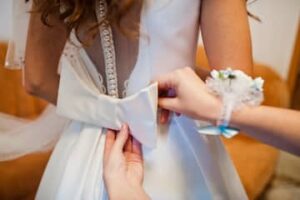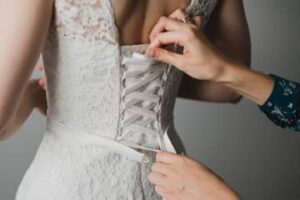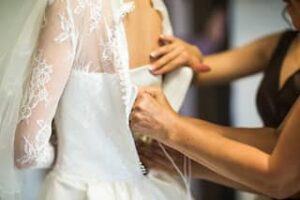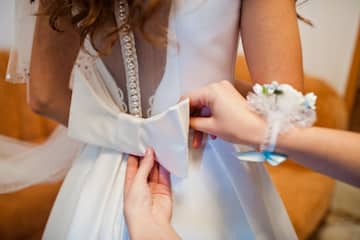
A bridal fitting is one of the most important parts of getting your wedding dress ready for the big day. It is where your gown starts to become your gown — shaped, adjusted, and refined to fit your body the way it should.
But to get the best results, it helps to come prepared.
At Bri L Design & Alterations, we know that even a beautiful gown can only be fitted accurately when the right details are present at the appointment. Shoes, undergarments, accessories, and support pieces all affect how the dress sits and falls.
If you have a bridal fitting coming up, here are 8 important things to bring.
1. Your Wedding Shoes
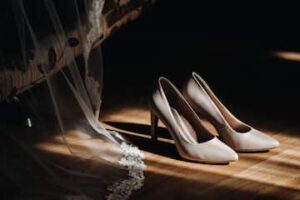
This is one of the most important things to bring to any bridal fitting.
Your shoes affect:
- hem length
- posture
- how the gown falls
- how the train sits
- how you walk in the dress
Even a small heel difference can change where the dress should be hemmed. If you plan to wear a different shoe height on the wedding day, the hem can end up wrong.
Bring the exact shoes you plan to wear if possible. If not, bring something with the same heel height.
2. The Undergarments You Plan to Wear
Undergarments can change the fit of a gown more than many brides expect.
This may include:
- a strapless bra
- shapewear
- supportive undergarments
- cups or inserts
- a specific slip or lining layer
If the undergarments change the shape of the bust, waist, hips, or overall silhouette, they need to be present at the fitting. Otherwise, the final fit may feel different on the wedding day.
3. Any Shapewear You’re Considering
Even if you are not fully sure yet, bring the shapewear you are most likely to wear.
This matters because shapewear can affect:
- waist fit
- hip smoothing
- how snug the bodice feels
- the dress’s overall balance on the body
It is much better to fit the gown with those layers in mind than to add them later and realize the fit has changed.
4. Your Veil or Hair Accessory
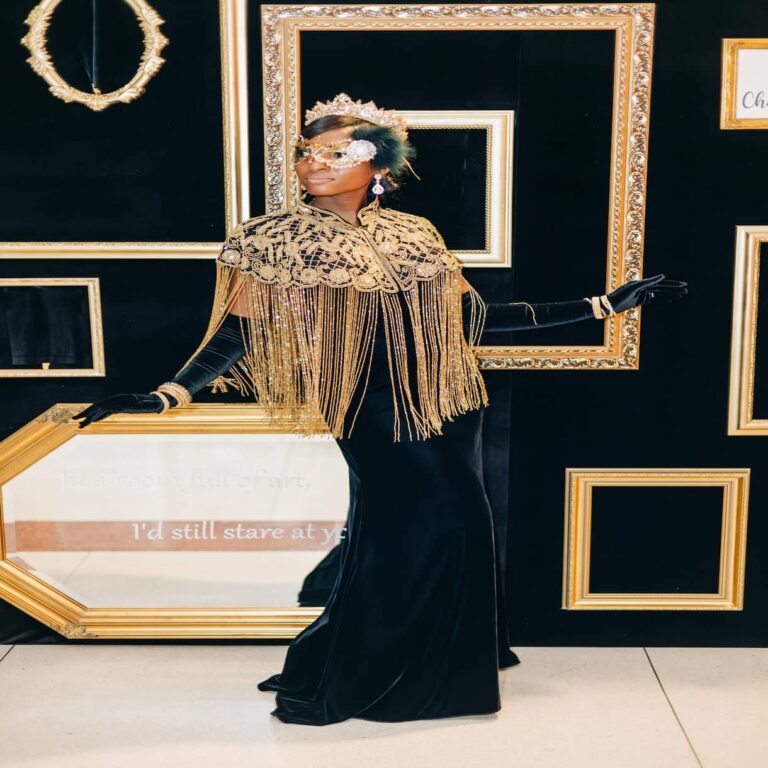
Your veil may not change the fit of the dress itself, but it can affect the overall styling and final look.
Bringing your veil or headpiece can help with:
- seeing the full bridal picture
- checking how the neckline looks with accessories
- understanding balance between dress details and styling
- confirming whether any design details compete visually
This is especially helpful for gowns with embellished necklines, illusion backs, detailed straps, or strong shoulder details.
5. Jewelry That Affects the Neckline or Overall Look
You do not need to bring every accessory, but it helps to bring anything that affects the styling of the dress.
That might include:
- statement earrings
- a necklace
- a bridal belt
- gloves
- hair jewelry
- a bolero, wrap, or overlay
This helps ensure the look feels cohesive and can influence small styling decisions related to the final fit.
6. A Trusted Person if You Want a Second Eye
Not every bride needs to bring someone, but if it helps you feel more confident, bring one trusted person whose opinion you value.
A second set of eyes can help with:
- overall look
- comfort feedback
- practical wedding-day questions
- bustle understanding
- remembering details after the appointment
The key is to bring someone calming and helpful — not someone who makes the appointment more stressful.
7. Questions About Comfort, Movement, or Bustle
Bring your questions with you.
This may include things like:
- Will I be able to sit comfortably?
- Is the bodice secure enough?
- Can I dance in this?
- How should the bustle work?
- Does the neckline feel right?
- Is the train manageable?
A bridal fitting is not just about appearance. It is also about making sure the gown feels wearable for the full day.
8. A Clear Idea of How You Want the Dress to Feel
This may not be something physical, but it matters just as much.
Think about:
- whether you want the bodice very fitted or slightly softer
- how much movement you want through the hips or legs
- whether support or comfort is the bigger priority in certain areas
- whether you want a more sculpted or more relaxed final feel
This helps the fitting process reflect not only how the dress should look, but how it should feel on your wedding day.
What Brides Often Forget
Some of the most commonly forgotten items include:
- shoes
- strapless bra or shapewear
- accessories that affect the neckline
- bustle questions
- trying to fit the dress with a different heel than the wedding shoe
These details seem small, but they can affect the final result in a big way.
Why Preparation Matters
A bridal fitting works best when the gown is being fitted under conditions that are as close to the wedding day as possible.
That helps with:
- hem accuracy
- bodice support
- strap placement
- bustle planning
- overall silhouette
- comfort and movement
The more accurate the fitting setup, the better the dress will feel when it really matters.
Final Thoughts
Bringing the right things to your bridal fitting can make the entire process smoother, more accurate, and less stressful. Shoes, undergarments, shapewear, styling pieces, and clear communication all help create a better final fit.
At Bri L Design & Alterations, we help brides prepare their gowns with detail-focused fittings that support both beauty and comfort.
Need bridal alterations or preparing for your first wedding dress fitting? Contact Bri L Design & Alterations to schedule your appointment.